The $2.2 Trillion Price Tag: How Literacy Impacts Our Economy
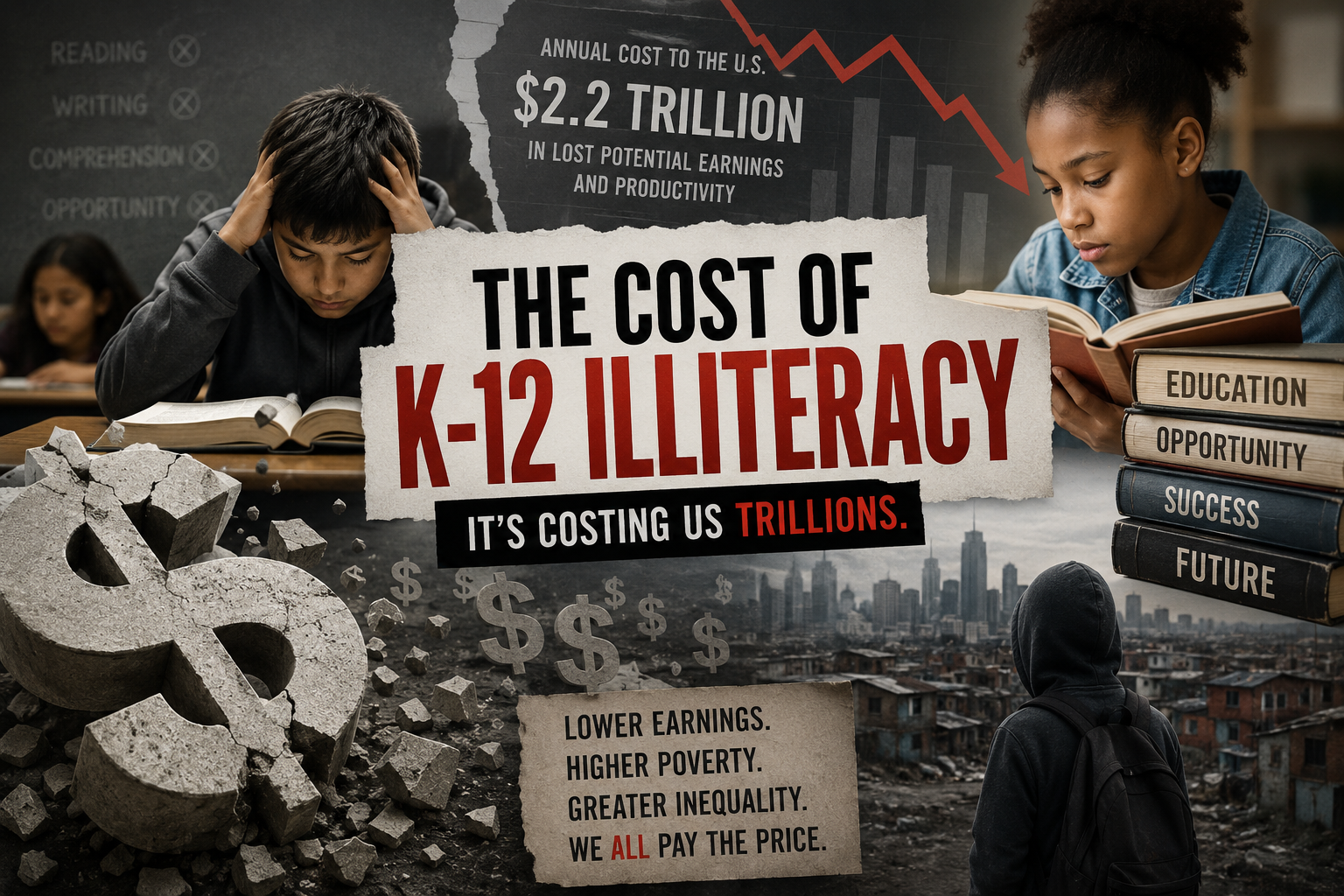
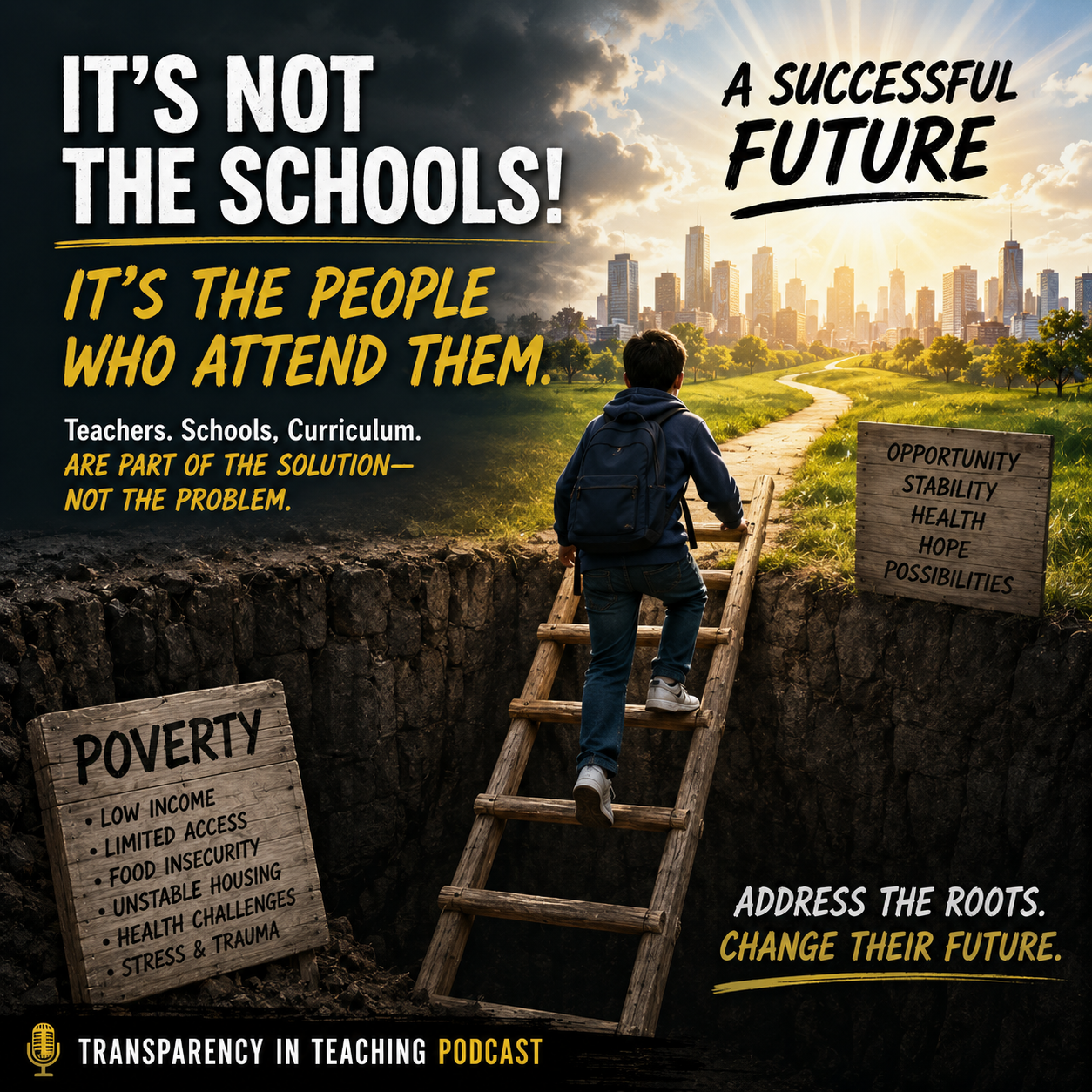
When we discuss the failures of our education system, the conversation almost inevitably drifts toward teacher performance, standardized testing, or the need for a new curriculum. Yet, as we explored in our recent podcast episode, 062: Fix Public Schools By Fixing the Public First, the root cause is rarely the classroom itself. Instead, the problems are deeply embedded in the socioeconomic fabric of our nation. One of the most sobering indicators of this systemic failure is the state of national literacy. Literacy is not just a soft skill for personal enrichment; it is the bedrock of a functioning economy. When we fail to ensure that every citizen can read and comprehend at a proficient level, we are not just failing students; we are incurring a $2.2 trillion annual tax on our collective productivity.
The State of Literacy: Moving Beyond Misconceptions
There is a persistent, romanticized notion that literacy in the United States was historically higher than it is today. People often look back at the 19th or early 20th century with nostalgia, assuming that because people could read the classics, everyone was functionally literate. This is a myth born from flawed methodology. Historically, literacy was self-reported, and the standards for what constituted "reading" were incredibly low. Today, we have rigorous, data-driven assessments that provide a much harsher, yet more accurate, picture of our reality.
Current data shows that while roughly 79% of American adults possess basic literacy, this statistic hides a much more troubling truth: half of those adults read at or below a sixth-grade level. In a modern economy that demands complex technical communication, data analysis, and critical thinking, a sixth-grade reading level is functionally insufficient. When a significant portion of the adult population cannot navigate basic instructions, health documents, or legal contracts, the entire machinery of the economy begins to sputter.
The Poverty-Education Feedback Loop
The correlation between poverty and educational outcomes is not merely a statistical coincidence; it is a causal, self-perpetuating cycle. When we look at the educational disparities between states—for instance, comparing outcomes in New Hampshire (one of the top-performing states, ranked 4th highest in NAEP scores, with a relatively low poverty rate of around 7.2%), with those in New Mexico (often among the lowest-performing NAEP states, has nearly double the overall poverty rate (17–18%) and a markedly high child poverty rate at 22.6 %),—we see the undeniable impact of environmental and economic factors. A child born into a low-income household faces a wall of obstacles before they even set foot in a kindergarten classroom.
Poverty creates a cognitive load. Families struggling to meet basic needs—food security, housing stability, and access to health care—often cannot provide the supplemental educational support that wealthier households take for granted. When a student goes to school hungry or exhausted from the stress of their home environment, their ability to focus on literacy acquisition is fundamentally diminished. We are expecting teachers to compete with the crushing weight of systemic poverty, and when the students inevitably struggle, we blame the teacher rather than the social conditions that made the struggle a near certainty.
The Financial Toll: Productivity Losses and Public Assistance
How do we arrive at the $2.2 trillion figure? It is calculated by combining lost individual productivity and the resulting reliance on public assistance. An individual who lacks basic literacy skills is locked out of most middle-class and high-wage career paths. This limits their lifetime earning potential, which, when aggregated across millions of people, results in a massive shortfall in GDP.
Furthermore, the lack of literacy forces a reliance on state and federal safety nets. Poor literacy is strongly linked to health issues—due to the inability to follow medication instructions or understand preventative healthcare—as well as higher rates of incarceration and unemployment. By failing to invest in effective, universal early literacy, we are essentially choosing to pay a much higher premium for public assistance, social services, and criminal justice intervention. We are essentially burning trillions of dollars to address the symptoms of a problem we refused to solve at the foundational level.
Structural Inequities: Property Taxes and Funding Disparities
The economic disparity in literacy outcomes is baked into the very way we fund our schools. By tethering school budgets to local property taxes, we have created a system that virtually guarantees that children in poor neighborhoods receive an inferior education. In wealthy districts, high property values lead to well-funded schools with smaller class sizes, better technology, and higher teacher salaries. In impoverished districts, the tax base is insufficient to provide even the most basic necessities.
This is a policy choice, not an inevitability. States like Idaho ($8k per pupil spending) and New York ($26K per pupil spending) provide stark examples of how these funding gaps widen the achievement divide. If we truly want to improve literacy rates, we must address the funding models that favor the affluent. If the quality of a child's education depends on the wealth of their zip code, we have not created a system of public education; we have created a system of geographic sorting where the poorest children are systematically deprived of the tools they need to escape poverty.
Beyond the Classroom: External Barriers to Success
Even if we were to magically equalize school funding tomorrow, we would still face the growing threat of distraction. The rise of smartphone ubiquity and the algorithm-driven attention economy have hit our students with unprecedented force. Literacy requires deep, sustained concentration—the exact opposite of what social media apps are designed to foster. Many schools are now locked in a battle with parents who demand their children have access to phones during the school day, even when those devices are demonstrably inhibiting the very learning outcomes those parents claim to care about. This is yet another example of an external barrier that teachers are expected to overcome without the necessary political or cultural support.
A New Path Forward: Technology and Systemic Reform
So, where is the light at the end of the tunnel? There is potential in leveraging technology, specifically Artificial Intelligence. AI could theoretically handle the repetitive, basic aspects of learning, allowing teachers to pivot their role from mere information deliverers to mentors, role models, and facilitators of social-emotional learning. However, technology is not a panacea. The human element of teaching—the mentorship and emotional support provided by a caring adult—remains irreplaceable, especially for children who lack stability at home.
True reform requires us to move beyond the schoolhouse gates. It means investing in community health, fair housing, and poverty reduction programs. We need to stop treating schools as "fix-all" institutions meant to solve every social ill and instead recognize that for schools to work, the society that surrounds them must be healthy enough to support learning.
Conclusion: Fixing the Public to Fix the Schools
The $2.2 trillion price tag of illiteracy is a wake-up call. It is a stark reminder that our current trajectory is fiscally unsustainable and morally bankrupt. By ignoring the links between economic stability, social equity, and educational proficiency, we are actively eroding our nation’s future potential. As we discussed in 062: Fix Public Schools By Fixing the Public First, the solution is not to double down on standardized testing or punitive measures against teachers. Instead, we must fundamentally shift our focus toward improving the lives of the people who attend our schools. If we want better student outcomes, we must create better conditions for those students to grow, thrive, and eventually succeed. Only by addressing the societal roots of inequality—and by extension, the barriers to literacy—can we truly hope to build an educational system that works for everyone, not just the fortunate few.
Resources used:
Estimates of Illiteracy, by States: 1950
Literacy Rate 1975-2025 | MacroTrends
Literacy Statistics 2024- 2025 (Where we are now)
Why Reading Matters – The U.S. Literacy Crisis
Per Pupil Spending by State 2023 - Wisevoter
How Much Do Private Schools Cost? Tuition by State (2025)
Most and Least Literate States - 24/7 Wall St.
Ron Clark Academy success comes at a price few schools can afford.
Most student achievement is attributed to out-of-school factors - CHILDREN AT RISK
Schools Alone Cannot Close Achievement Gap
A dismal report card in math and reading
Wide gap in SAT/ACT test scores between wealthy, lower-income kids — Harvard Gazette.

A 36-year veteran of middle school teaching, Anne is now happily retired. But just because she gave up her room keys doesn't mean she's given up her passion for public education. Anne now works as a university supervisor, helping student teachers and interns navigate the credentialing process while maintaining their sanity in their classrooms. As the creator, producer, editor, and one of the hosts of Transparency in Teaching, Anne hopes to shed light on the plight of public school teachers and the issues that affect them the most. Her mission is to open the classroom doors so that people everywhere can see the real problems educators at all levels deal with, not the politicized garbage that comes out of Aunt Mary's Facebook feed.
When not working to enlighten the masses, Anne enjoys spending time with her husband and two dogs (an adorable Italian greyhound mix thingy and a Boston Terrier, courtesy of the local shelters. Adopt a pet! They need you more!). She also enjoys spending time with her two grown sons when they can break away from young adulthood to spend time with their mother. (read that last sentence in the voice of a guilt-anointing Jewish mother)

WTF Education News: Promotion Policies, Armed Teachers, and Mandatory Anthem Singing